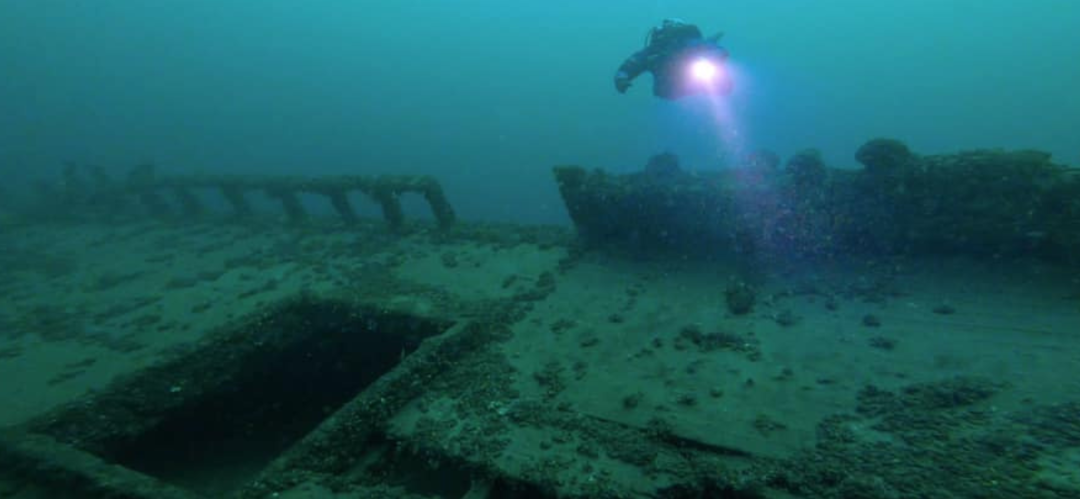
Ontario’s marine history is a rich tapestry that plays a critical role in
understanding the province’s development, trade, and cultural exchange. The Great
Lakes have been vital waterways for centuries, carrying ships that have shaped the
region’s economy and daily life. Preserving shipwrecks is not only about safeguarding
artifacts; it’s about protecting our heritage and the stories these vessels tell.
Each wreck serves as a time capsule, offering insights into historical navigation,
shipbuilding techniques, and the lives of those who sailed. Moreover, these underwater
sites foster tourism, research opportunities, and a sense of connection to the past,
underscoring the profound importance of marine history and wreck preservation in
Ontario.
The Purpose of SOS
To further public knowledge and appreciation of Ontario’s marine heritage by such means
as may be expedient and, in particular, but without limiting the foregoing:
- By assisting museums and public archives in acquiring information and displaying
artefacts pertaining to Ontario maritime history; - By undertaking public education projects in furtherance of the objectives of the
Corporation; - By surveying, documenting and encouraging the preservation of shipwrecks in
Ontario’s lakes and rivers as a resource of historical and recreational value to the
public in the Province and Canada.
The Role of SOS
Save Ontario Shipwrecks is a not-for-profit organization, dedicated to Marine Heritage
Conservation. In order to carry out this purpose, four long term goals have been set out:
- To stop the destruction of marine heritage sites;
- To identify, evaluate and monitor marine heritage sites;
- To conduct projects which contribute to the knowledge and understanding of
- Ontario’s maritime history; and
- To provide the diving community and the general public with the opportunity to learn
and understand more about Ontario’s maritime history, and the value of our marine
heritage resource.
Studying
Activities related to the study of Ontario’s marine heritage include historical and archival
research, oral histories, side scan surveys and underwater archaeological investigations.
Through chapter sponsored projects, such as plaques, surveys, buoys and internationally
recognized diver training through the Nautical Archaeology Society (NAS), we not only help protect our dive sites, but spread the important word to many others.
SOS believes in in-situ preservation of artifacts (i.e., leaving them where found) for others
to see any time as opposed to expensive preservation and then being hidden from the
public in museum collection storage facilities.
Preserving Sites
Preservation activities undertaken by SOS members include a mooring program which
seeks to minimize anchor damage on sites which are regularly being visited by sport divers.
Along with the mooring program, site monitoring and documentation activities help to
record and preserve marine heritage sites.
Presentations to scuba clubs and training courses highlight the need for all divers to use
shipwreck sites responsibly – that is, to minimize the negative impact of their visit to these fragile underwater museums.
Promoting Marine Heritage
We promote an appreciation of Ontario’s rich marine heritage through a number of
initiatives.
SOS members regularly make presentations to scuba training courses, public groups and
dive clubs. We design, produce and bring displays about marine heritage to underwater
trade shows and conferences.
We seek to work very closely with the diving tourism industry to ensure that the rapidly
growing heritage tourism initiatives are undertaken responsibly, from the standpoint of site preservation.
Lobbying Efforts
Ontario enjoys one of the finest marine heritage resources of any jurisdiction on the planet, and SOS lobbies all levels of government with a view to developing resource management initiatives which strike an appropriate balance amongst the competing interests of study, preservation and use.
Membership in SOS is open to all persons and organizations with an interest in marine
heritage, imposes a duty to act in a responsible manner towards submerged cultural
resources and to abide by our mission and ethics.
Active participation in our programs can provide an extremely rewarding and satisfying
experience for this indeed is an area where an individual can make a very significant and
lasting contribution to a worthwhile cause which benefits society as a whole.
 S.O.S. Niagara